|
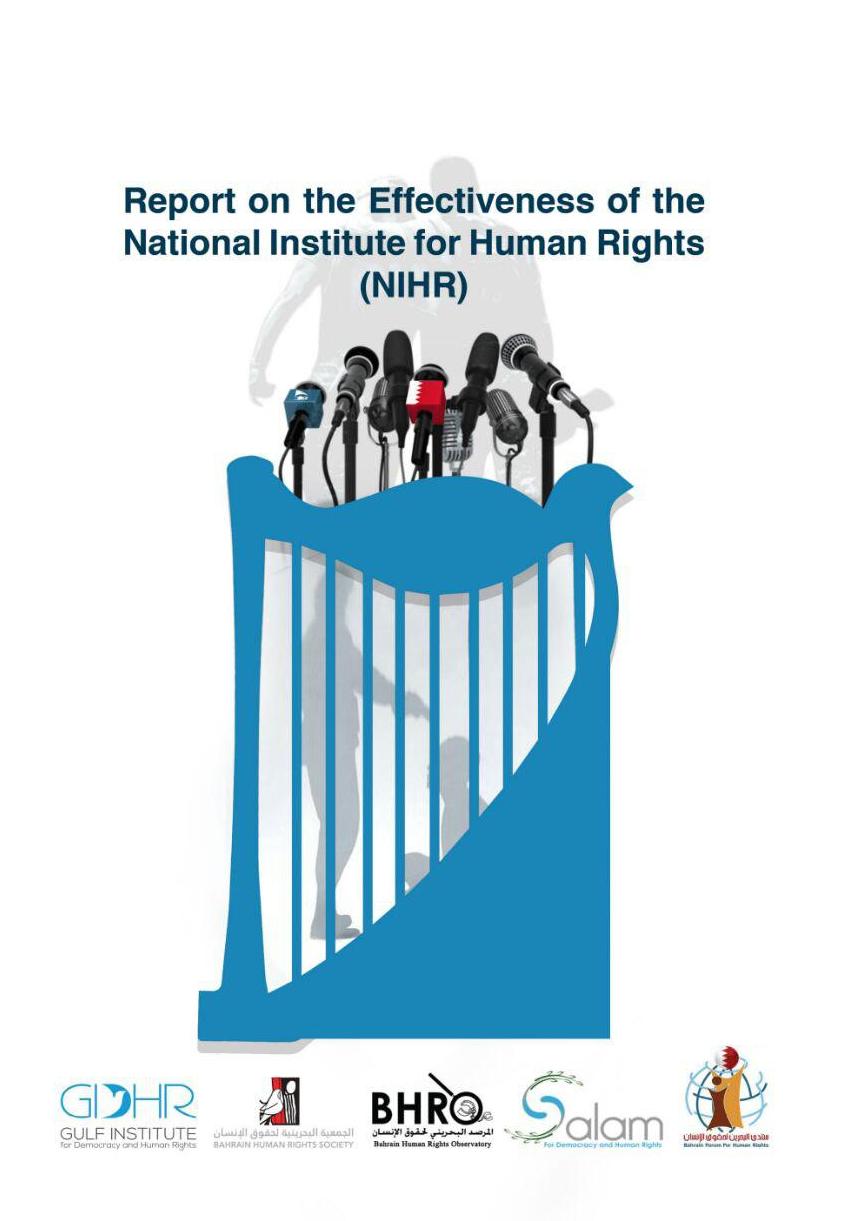
28 Hearings, No Findings Disclosed... Bahrain Forum: The National Institution Must Expose Violations, Not Justify Its Silence The Bahrain Forum for Human Rights (BFHR) considers that the statement issued by the National Institution for Human Rights (NIHR) on November 9, 2026, regarding its monitoring of the trial of Shiite religious scholars, falls short of its legal and human rights responsibilities. The statement merely reported that NIHR representatives had attended 28 court hearings, received complaints from the defense team, and followed up with the relevant authorities, without disclosing any clear findings concerning the violations that have marred the investigation, detention, and trial proceedings. Attending court hearings is not, in itself, evidence of the integrity of the proceedings or the effectiveness of oversight. Rather, it places an obligation on the NIHR to disclose the violations it has observed, the measures it has taken to address them, and the extent to which the relevant authorities have acted on its recommendations. A further legal concern arises from the NIHR's description of the case as being linked to the “main organization affiliated with the Iranian Revolutionary Guard Corps.” This wording reflects an adoption of the official prosecution narrative before a final judicial ruling has been issued, undermining the presumption of innocence guaranteed by Article 20(c) of the Bahraini Constitution and Article 14(2) of the International Covenant on Civil and Political Rights (ICCPR). As a national institution entrusted with protecting human rights, the NIHR is obliged to distinguish between allegations and facts established in court, and to refrain from presenting the security authorities' account as established fact. Using such descriptions without qualification contradicts the neutrality the institution claims to uphold and raises serious questions about the independence of its human rights assessments. Regarding testimonies of torture, coercion, and assault inside detention facilities, the NIHR's statement provided no answers concerning the allegations raised before the court on October 7, 2026, by the esteemed religious scholar Sheikh Mohammed Sanqour. Sheikh Sanqour reported being subjected to torture and coercion, described irregularities in the investigation, and requested the examination of video recordings. Nor did the statement address the assault against Sheikh Ali Al-Mustarshid at Dry Dock Prison, or the violations BFHR has documented against several other scholars. These accounts raise direct questions for the NIHR: - Has it conducted independent, confidential interviews with the complainants?
- Has it investigated the circumstances of the interrogations and the extraction of confessions?
- Has it requested the examination of video recordings and independent medical examinations?
- If it has taken these steps, where are the findings?
The NIHR's responsibilities also extend to the discrepancies BFHR previously raised concerning interrogation records. Specifically, these records show that the questioning of different defendants began at the exact same minute before the same member of the Public Prosecution. Furthermore, there are striking similarities between statements attributed to different defendants, as well as contradictions concerning the date on which the organization at the center of the charges was allegedly established. Additionally, the exclusion of defendants' families and human rights activists from the November 8, 2026, hearing raises serious concerns about the principle of public hearings and guarantees for the right to a defense. These matters require an independent human rights assessment—not merely basic documentation or the referral of complaints back to the very authorities accused of committing them. BFHR rejects the NIHR's reliance on judicial independence and impartiality to justify its failure to take a clear position on human rights violations affecting the investigation, detention, and trial proceedings. The Forum stresses that judicial independence—even though it is lacking in Bahrain—does not preclude human rights oversight of judicial proceedings, nor does it relieve the NIHR of its legal duty to monitor and investigate violations. Law No. 26 of 2014 establishing the National Institution for Human Rights, as amended, expressly grants the NIHR powers to receive and follow up on complaints, investigate violations, and assess the responses of competent authorities. Respect for judicial independence, therefore, does not mean suspending the NIHR's mandate or remaining silent about violations. Nor does impartiality justify refraining from taking a firm position based on facts and evidence. The NIHR is not a mere mailbox between victims and the authorities. Its role cannot be reduced to forwarding complaints and receiving official responses. It must independently verify the facts, assess those responses, expose violations, and demand accountability for those responsible. These shortcomings cannot be separated from international concerns about the NIHR's performance. In its 2024 review, the Sub-Committee on Accreditation of the Global Alliance of National Human Rights Institutions (GANHRI) maintained the institution's B-status accreditation because it failed to fully comply with the Paris Principles. Concerns also persisted regarding its handling of serious violations—particularly torture and arbitrary detention—and its failure to adequately disclose the findings of its monitoring and remedial measures. The trial of the religious scholars therefore represents a practical test of the NIHR's independence and its response to these international concerns. In this context, BFHR sent an official letter to the NIHR's President on October 3, 2026, calling on the institution to fulfill its responsibilities. The letter requested: - Independent and confidential interviews with detainees;
- Verification of testimonies concerning torture and coercion;
- Preservation of video recordings, medical records, and other relevant evidence; and
- Public disclosure of its monitoring findings, recommendations, and actions taken.
More than a month after these requests were made, the NIHR's latest statement provides no clear answers as to whether any of them have been implemented. Instead, it has confined itself to listing its attendance, monitoring activities, and correspondence, without explaining what concrete results these efforts have produced. The question, therefore, is no longer whether the NIHR is aware of the violations or has attended the hearings, but whether it is actually exercising its legal powers, prepared to disclose the findings of its oversight, and willing to hold violators accountable. Against this backdrop, the NIHR's announcement that it will make its position known “if any irregularities or violations are found” fails to address the human rights demands put forward. This is particularly troubling given that its representatives have attended dozens of hearings, received complaints from the defense team, and reviewed official responses. Instead of reassuring the public, the statement raises further questions about the seriousness of the NIHR's monitoring and the independence of its assessments. General statements about monitoring and coordination are no longer acceptable while investigation findings, the status of complaints, and remedial measures remain undisclosed and shielded from scrutiny. The NIHR must provide documented answers about its performance, rather than merely reiterating its mandate or declaring its readiness to act in the future. In light of the above, the Bahrain Forum for Human Rights calls on the National Institution for Human Rights to: - Publish a detailed, independent monitoring report on its oversight of the trial, specifying the sessions attended by its representatives, the observations and violations documented, the number and nature of complaints received, the findings and results of its investigations, the recommendations submitted to the competent authorities, and the extent of their response, while strictly maintaining the confidentiality of victims' and witnesses' data.
- State a clear human rights position on testimonies of torture, coercion, and ill-treatment; conduct independent, confidential interviews with complainants; follow up on necessary medical examinations; investigate the circumstances of interrogation and detention; and demand prompt, independent, and impartial investigations and accountability for those responsible for violations.
- Demand the preservation and examination of evidence and recordings relating to the investigation procedures; investigate the discrepancies raised concerning interrogation records and statements attributed to defendants; and publicly disclose its assessment of whether legal safeguards regarding the lawfulness of evidence and defense rights were respected.
- Clarify its position on restrictions on public hearings and the exercise of defense rights—including the exclusion of families and observers—as well as the extent to which lawyers were enabled to access case files, question witnesses, present defense arguments, and receive responses to requests concerning these safeguards.
- Disclose the findings of its review of official responses to complaints, assess the adequacy of the measures taken to address violations, and report any instances of refusal to cooperate or to provide the institution with the information and documents needed to carry out its mandate.
- Take urgent protective and monitoring measures to safeguard complainants and witnesses against pressure and retaliatory measures, guarantee their physical and psychological safety, enable secure communication with their lawyers, and ensure access to necessary medical care and examinations.
- Exercise its legal powers independently and transparently, without using judicial independence or impartiality as a pretext for delaying public human rights positions or refraining from exposing violations, and seek assistance from relevant international mechanisms when necessary to ensure independent and effective investigations into serious violations.
Bahrain Forum for Human Rights November 10, 2026 |